 Diraflow
Diraflow
Diraflow
Precision pixel-level and spatial annotations for computer vision — bounding boxes, segmentation, 3D cuboids, keypoints, and text extraction. Expert annotators with rigorous QA.
Nine specialized annotation types covering every computer vision use case — from 2D detection to 3D understanding and text extraction.
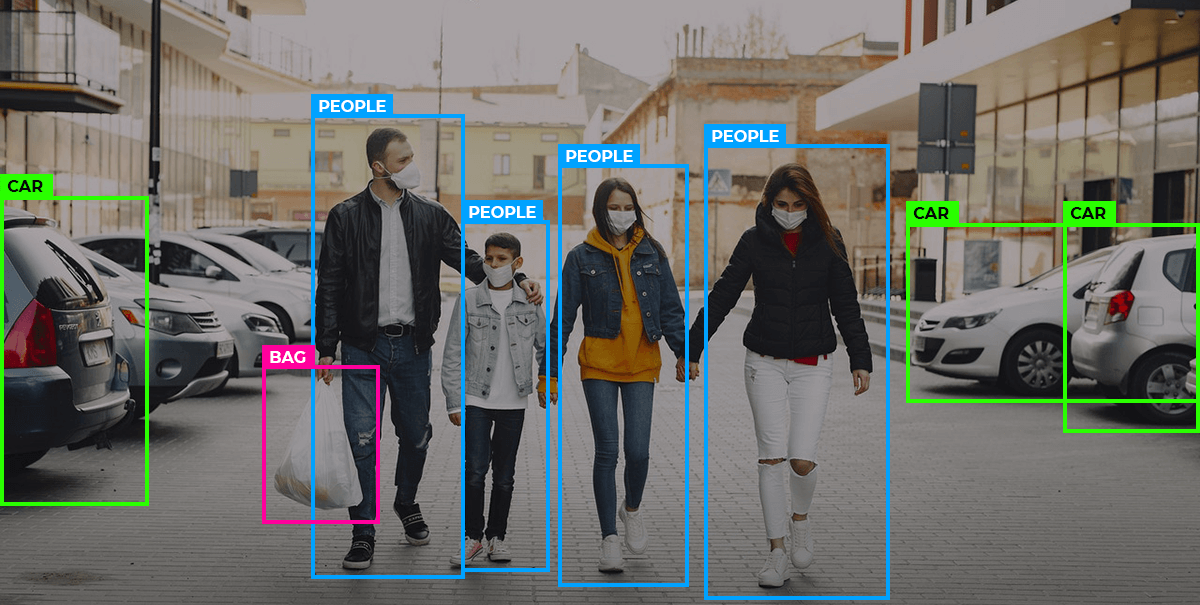
Bounding boxes are axis-aligned rectangular annotations that tightly enclose objects within an image. Each box is defined by its top-left and bottom-right coordinates, making this the foundational annotation type for object detection models. Our expert annotators ensure pixel-perfect precision, handling occlusion, truncation, and edge cases with consistent quality standards.
Common use cases: Retail inventory tracking, vehicle detection in traffic monitoring, pedestrian detection for safety systems, product recognition in e-commerce, and general object detection in autonomous systems.
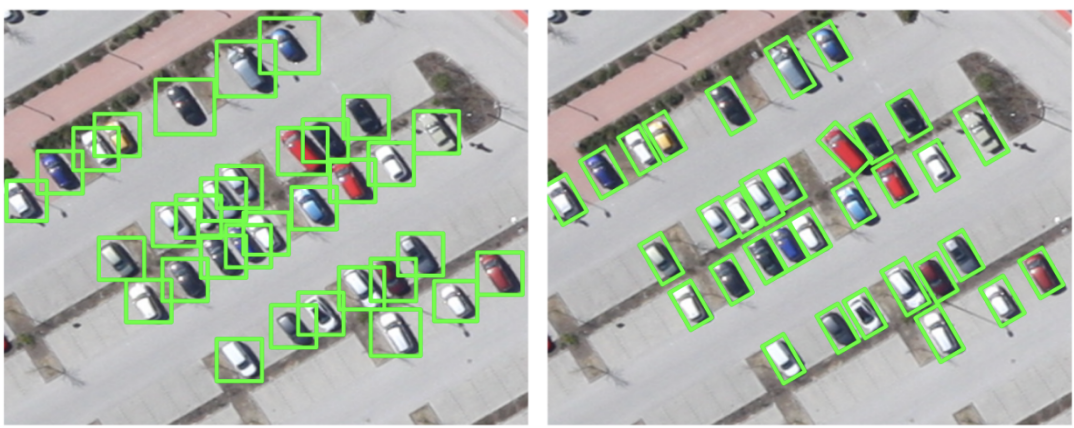
Rotated bounding boxes extend beyond axis-aligned rectangles to capture objects at arbitrary angles. This annotation type includes rotation angle parameters alongside coordinates, enabling more efficient object representation. Ideal for datasets containing rotated, skewed, or tilted objects where standard boxes would introduce significant empty space or miss boundaries.
Common use cases: Aerial and satellite imagery analysis, drone surveillance, ship and aircraft detection, rotated text detection in documents, land surveying, and sports analytics where players/equipment are at various angles.
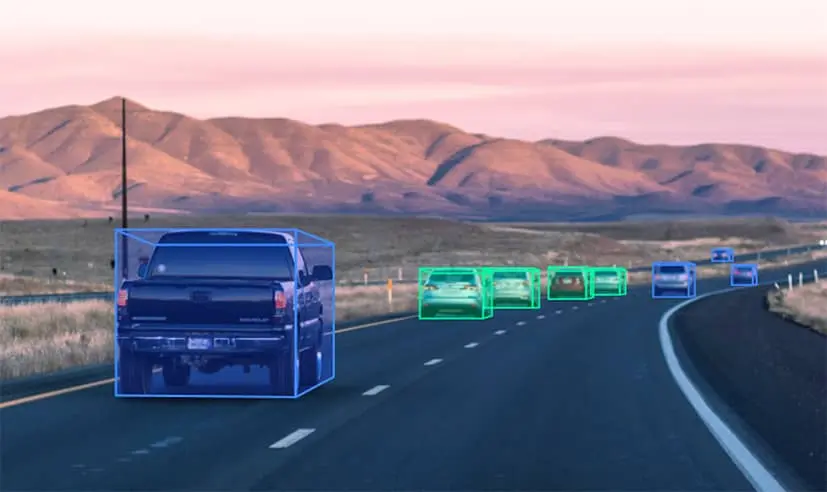
3D cuboid annotations project three-dimensional bounding boxes onto 2D image space, capturing depth and spatial orientation. Each cuboid is defined by 8 corner points representing a 3D rectangular prism, enabling models to understand object dimensions and spatial relationships. This is essential for applications requiring accurate 3D localization from monocular or multi-camera inputs.
Common use cases: Autonomous vehicle perception systems, 3D object detection in urban scenes, robotics navigation, augmented reality applications, furniture and product dimension estimation, and construction site monitoring.
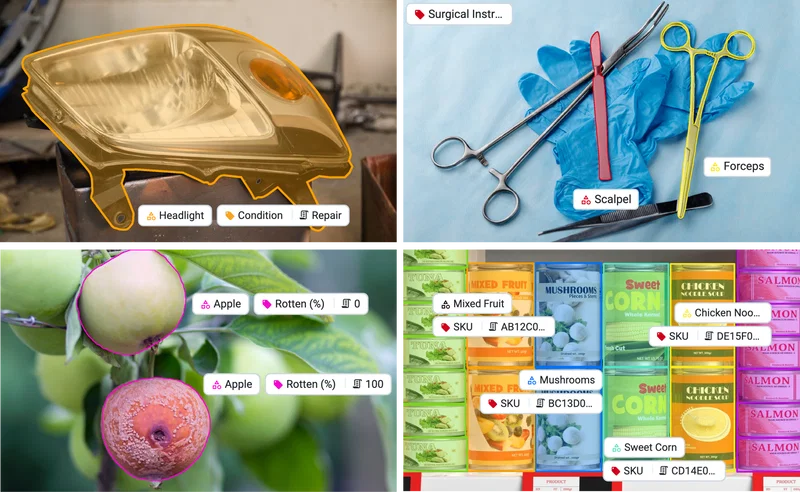
Image classification assigns one or more categorical labels to entire images, capturing high-level semantic meaning. Single-label classification assigns exactly one category, while multi-label allows multiple applicable tags per image. Our annotators apply strict criteria, handle ambiguous cases through consensus, and maintain detailed rationale for each classification decision.
Common use cases: Auto Parts Condition Assessment — Detect and classify vehicle components (e.g., headlights) and evaluate their condition and repairability.Surgical Instrument Identification — Recognize and label medical tools (scalpels, forceps, clamps) to support operating room inventory and safety checks.Fruit Quality & Defect Detection — Inspect produce on trees or conveyor lines, flagging rotten or damaged fruit with a defect percentage score.
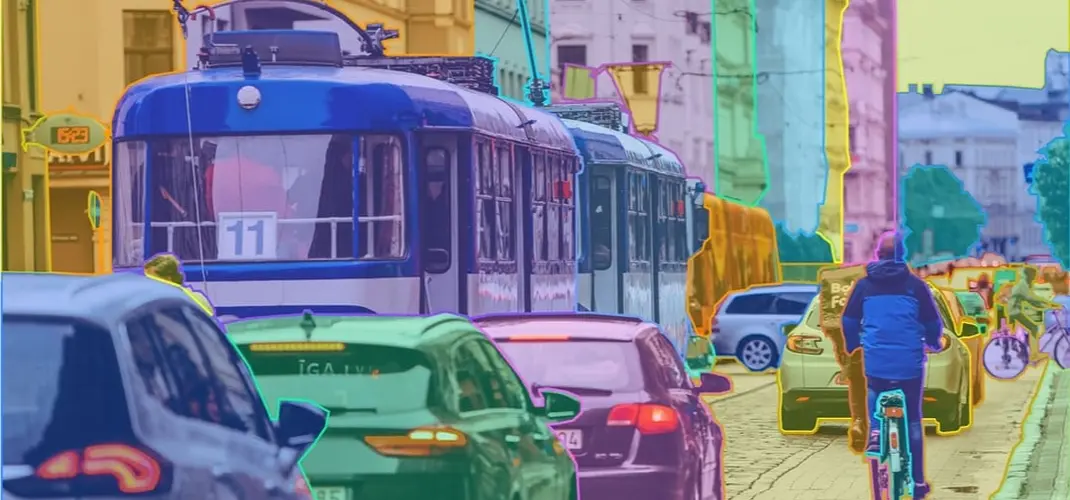
Semantic segmentation assigns a class label to every pixel in an image, creating dense pixel-level masks. All pixels belonging to the same object class (e.g., all cars or all sky) share the same label, regardless of individual object identity. This enables models to understand scene composition and spatial relationships with high granularity, critical for autonomous systems and medical imaging.
Common use cases: Autonomous driving scene understanding, medical image analysis (organ/tissue segmentation), satellite imagery analysis (land cover classification), road and infrastructure mapping, environmental monitoring, and facial component detection.
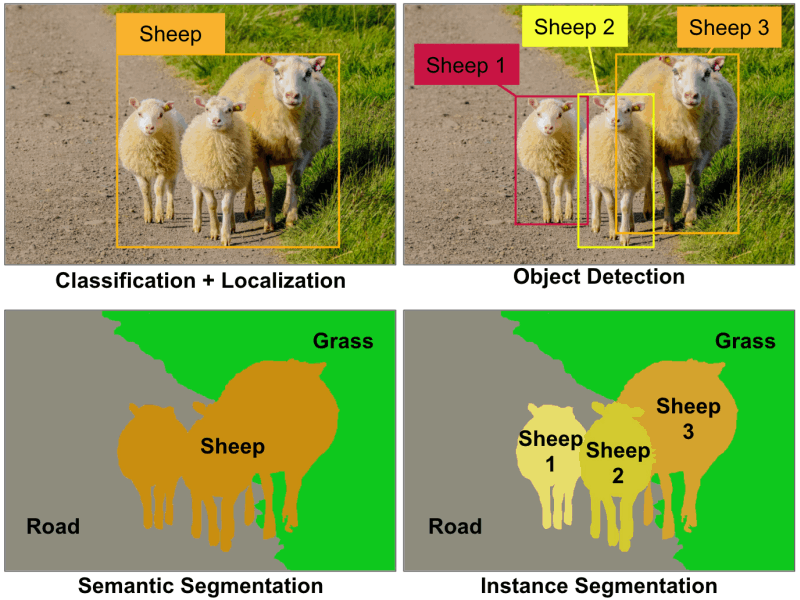
Instance segmentation combines object detection with pixel-level precision by assigning unique identifiers to each object instance of the same class. Unlike semantic segmentation where all cars share one label, instance segmentation distinguishes sheep #1, sheep #2, etc. This enables precise object counting, tracking, and individual object property analysis in crowded or complex scenes.
Common use cases: Crowd counting and tracking, cell detection in microscopy, multi-object tracking in sports, autonomous vehicle perception, agriculture crop plant detection and monitoring, industrial defect detection with multiple defects per image.
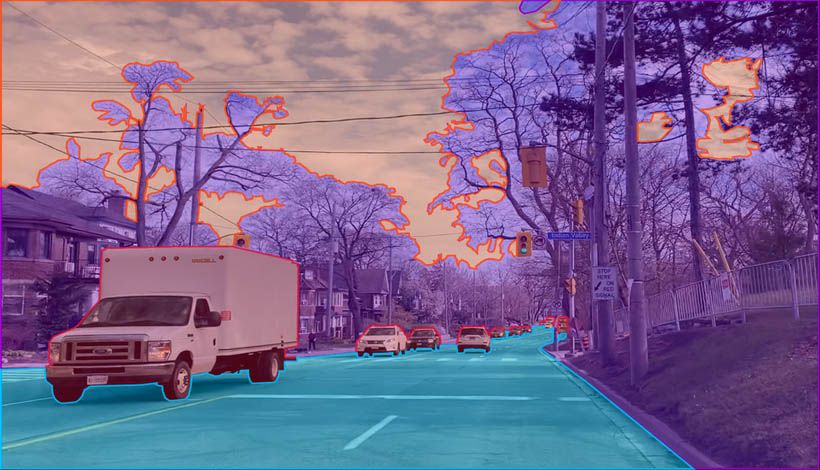
Polygon annotations use multi-point sequences to precisely outline complex, irregular object boundaries. Unlike rectangular boxes, polygons conform to actual object shapes with arbitrary numbers of vertices. This provides tighter, more accurate object representations for models requiring precise boundary information, reducing false positives from excess enclosed space.
Common use cases: Building and footprint extraction from aerial imagery, road network delineation, custom shape detection in manufacturing, medical image region-of-interest marking, document boundary extraction, and wildlife habitat mapping.
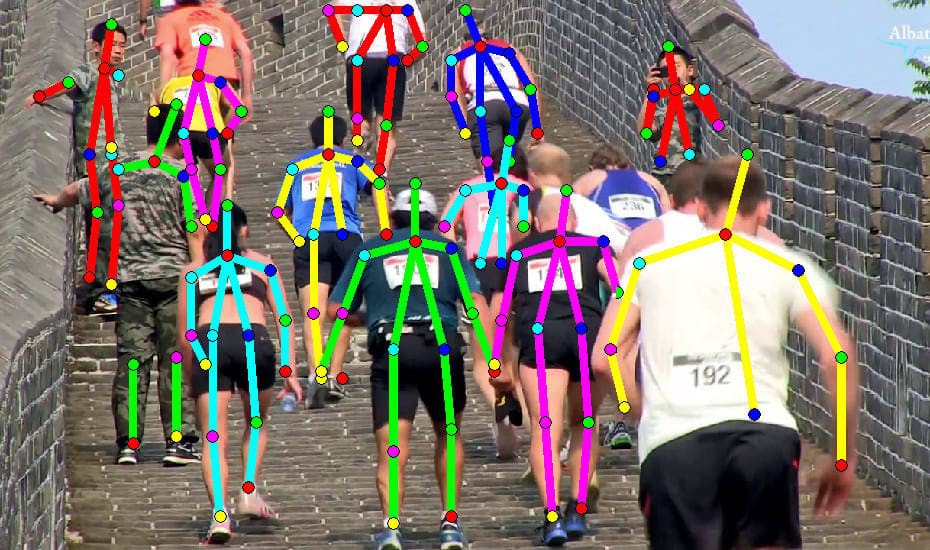
Keypoint annotations mark precise spatial coordinates of anatomical, structural, or functional landmarks within objects. Each keypoint is a single point with x,y coordinates, often used to represent joints, facial features, building corners, or other salient regions. Multiple keypoints together define object pose, structure, and articulation, enabling models to understand complex deformable objects and spatial configurations.
Common use cases: Human pose estimation, facial landmark detection, hand pose tracking, sports player skeleton detection, animal pose analysis, architectural feature detection, and medical imaging anatomical landmark localization.
We hire expert annotators, enforce inter-annotator agreement standards, and reject work that doesn't meet our quality bar — because pixel-level accuracy compounds across model training cycles.
Send us details about your annotation needs and we'll provide a tailored proposal — scope, timeline, and pricing — within one business day.
Include annotation type, image count, and timeline.